
Summary
As the 2026 mandate for sustainable liquid packaging approaches, CPG brands must move beyond incremental updates to future-proof their portfolios. This summary outlines the five strategic pillars for success: designing for circularity, achieving radical plastic reduction, optimizing for e-commerce efficiency, enhancing the consumer experience, and leveraging digital transparency.
The AeroFlexx solution addresses these pillars by offering an all-in-one package that uses up to 70% less plastic and ships flat to transform supply chain logistics. Learn how to lead with innovation to meet global regulations while fortifying your brand’s equity and sustainability commitments.
As we wind down the year and look toward strategic planning for 2026, one thing about the future is clear: The time for incremental change in packaging is over. Brands need to leave this idea behind in 2025 and instead focus on driving global growth and fortifying brand equity that requires leading with innovation across three critical vectors: sustainability, supply chain efficiency, and user experience.
Global regulatory pressure—from extended producer responsibility to single-use plastic bans—and evolving consumer demands are forcing a major strategic pivot. The future of liquid packaging isn't about minor tweaks but an all-in-one solution that’s engineered to solve for circularity, source reduction, e-commerce performance, and consumer delight.
The Five Pillars of CPG Strategy in 2026
To navigate this new landscape, your packaging strategy must be built on these five nonnegotiable pillars:
1. Designing for Simplification to Meet the Circularity Mandate
The market demand for efficient recycling is making complex, multilayer films and multicomponent packaging obsolete. Why? Because their complexity makes sorting and processing inefficient and costly.
The industry is shifting toward mono-material packaging to simplify material streams and enable efficient, high-quality recycling. Your goal should be to move products cleanly and consistently through a single, widely accepted recycling process, reducing compliance risk and increasing material value.
2. Radically Reducing Plastic
The primary goal has moved beyond using recyclable materials to achieving dramatic source reduction by lowering the total virgin material used in the first place.
Minimal resource use and lower environmental impact are the signals of premium value in 2026. This translates directly to lower production carbon emissions and reduced freight costs across the entire logistics chain.
3. Optimizing for E-Commerce and Supply Chain Efficiency
The rise of parcel shipping has exposed the limits of traditional packaging. Rigid packaging is often inefficient to ship and prone to breakage, leading to costly damage rates, returns, and the need for excess secondary packaging.
Packaging must be optimized for efficient logistics by shipping flat before filling, which significantly reduces your carbon footprint and freight spend.
Readiness for standards such as Amazon’s ISTA 6 program is also essential, reducing the need for bubble wrap and other protective materials.
4. Integrating Intuitive Functionality for a Better Consumer Experience
The market demands intuitive, accessible, and frustration-free packaging that minimizes mess and product waste. For many categories, rigid bottles with pumps or screw caps lead to gunky buildup of the product and a frustrating experience.
Packaging must eliminate messy closures and deliver an intuitive, accessible dispensing experience that maximizes the value the consumer gets from their purchase and reduces household product waste.
5. Offering Digital Transparency and Smart Packaging
For both consumers and investors, measurable, auditable sustainability key performance indicators are nonnegotiable. Leveraging QR codes and smart labeling allows consumers to scan a package and trace its entire lifecycle, and it includes clear, specific recycling instructions.
This provides the transparent data needed to bridge the consumer attitude-behavior gap—which is the difference between a consumer’s expressed attitudes and their actual purchasing behavior—and build authentic trust in your brand’s commitments.
The AeroFlexx Solution: Packaging Engineered for the Future
AeroFlexx offers an entirely new category of sustainable liquid packaging that’s designed to meet all five strategic pillars. Our innovative technology delivers a lightweight, flexible package engineered to act like a rigid bottle, providing an all-in-one solution that simplifies your supply chain and accelerates your sustainability goals.
Advancing Circularity and Simplification
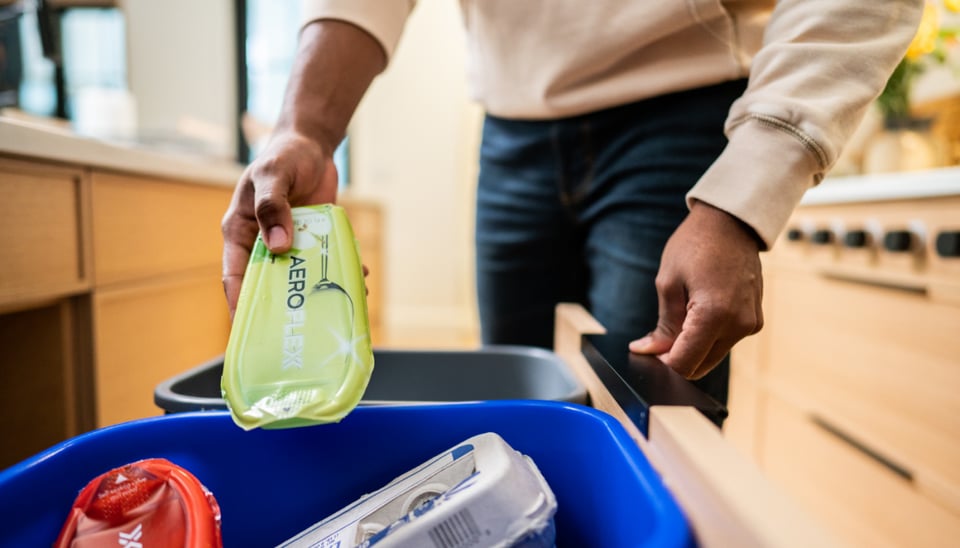
The AeroFlexx Pak is an all-in-one package that simplifies complexity. It eliminates the need for a separate cap, label, and rigid bottle, effectively reducing the component count from three or four down to one integrated unit. This design inherently supports efficient material sorting and is engineered to be curbside recyclable where all plastic bottles are accepted.
Reducing Plastic Significantly
We directly address the pressure for source reduction by using up to 70 percent less plastic up front compared to traditional rigid bottles and incorporating up to 50 percent recycled content. This massive material savings translates directly into a lower carbon footprint and helps major brands hit their core plastic reduction commitments.
Optimizing for E-Commerce and Logistics
The Pak's design radically transforms supply chain efficiency:
- AeroFlexx Paks ship flat, drastically increasing the number of units per truck (for instance, 1.2 million Paks can ship vs. 120,000 rigid bottles), significantly cutting carbon dioxide emissions and freight costs.
- The package is Amazon ISTA 6 approved for SIOC, minimizing product damage and eliminating the need for wasteful secondary packaging, such as bubble wrap.
Offering a Better Consumer Experience
Our patented airframe technology gives the package a rigid-like, self-supporting shape while ensuring intuitive functionality.
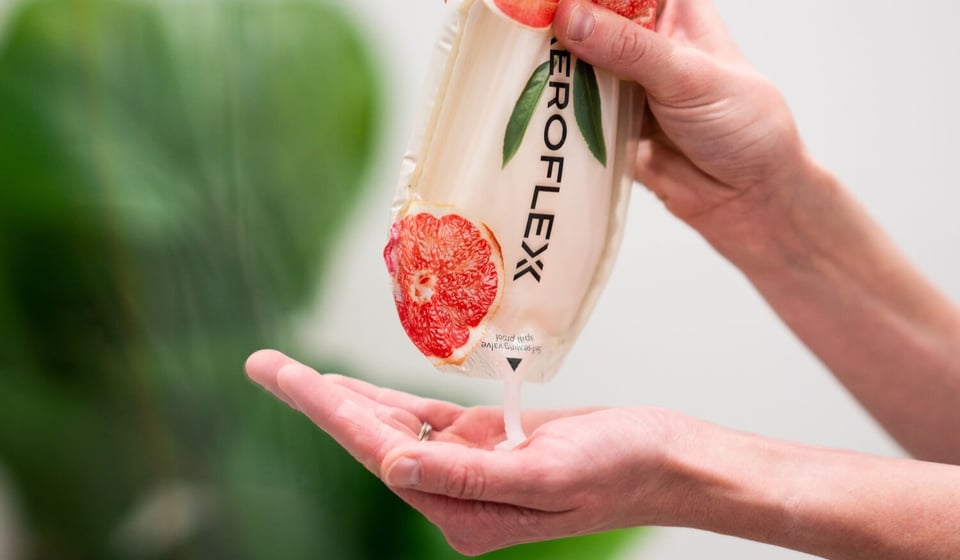
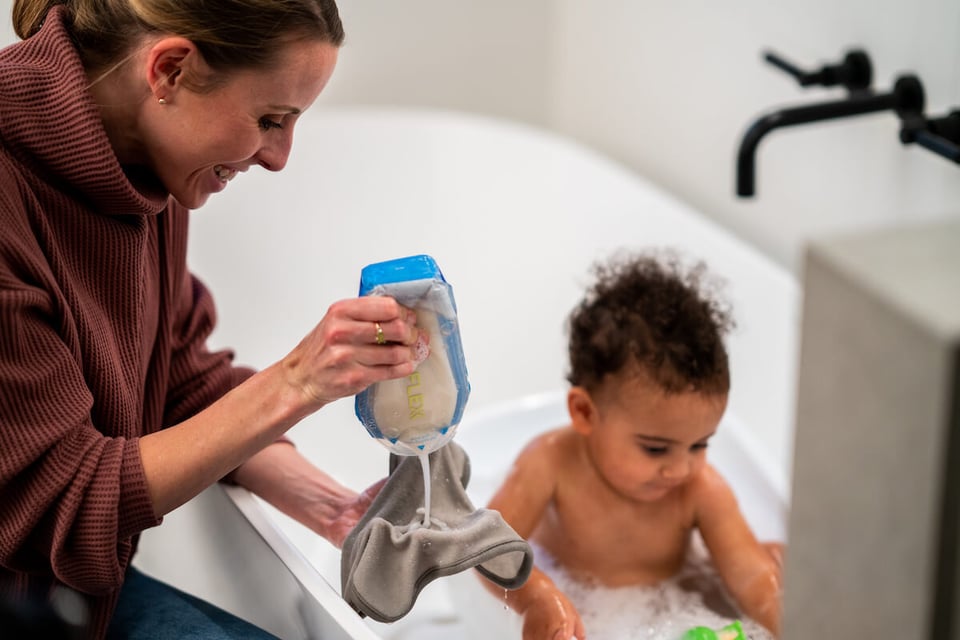
- The Pak can be used with one hand and has precision dispensing for exact amounts of product.
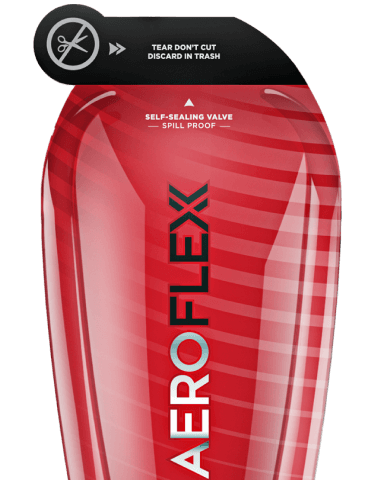
- The self-sealing valve prevents spills, reduces product waste, and maximizes the value of the product.
- The 360-degree printable surface provides ample space for clear recycling instructions and can easily incorporate smart features for enhanced consumer transparency.
The most trusted personal care, household products, and industrial liquids brands are moving beyond incremental change. They are adopting this all-in-one solution to simplify the supply chain, accelerate their plastic reduction commitments, and provide consumers with a superior, frustration-free experience.
To read more about how and why they’re doing this, check out our helpful infographic, “Accelerating Sustainability with Eco-Friendly Personal Care Products and Packaging.”